
Solutions industrielles personnalisées avec des élastomères de polyuréthane
Définition des élastomères de polyuréthane
Les élastomères de polyuréthane sont des matériaux polyvalents qui se caractérisent par leurs excellentes propriétés physiques et leur adaptabilité à un large éventail d'exigences industrielles. Grâce à leur structure unique, les élastomères de polyuréthane de P+S offrent une combinaison exceptionnelle d'élasticité, de résistance à l'abrasion et de produits chimiques
Cohérence.
Ces propriétés font de nos matériaux le premier choix pour les applications techniques exigeantes dans de nombreux secteurs. Depuis plus de 50 ans, P+S développe des solutions individuelles à base d'élastomères de polyuréthane, dans le but de combiner performances, qualité et durabilité maximales.
Structure chimique des élastomères de polyuréthane
La base chimique des élastomères de polyuréthane est la réaction de Isocyanates et polyols, complétés par des agents de réticulation,
qui stabilisent le matériau dans sa structure finale et le fonctionnalisent en fonction de l'application. En fonction des besoins,
produire une grande variété de systèmes de polyuréthane en utilisant cette réaction de base.
Élastomères compacts se caractérisent par leur résistance mécanique et leur résistance à l'usure particulièrement élevées. vous
sont idéales pour les éléments de machines à usage intensif tels que les rouleaux, les éléments d'amortissement ou les moulures techniques.
Avec une très large gamme de formulations, P+S propose des solutions de matériaux sur mesure qui sont précisément adaptées aux exigences techniques et
sont adaptés aux exigences économiques des clients, toujours sur la base de la technologie la plus récente en matière de polyuréthane-élastomère.
Différenciation des élastomères de polyuréthane fabriqués par P+S par rapport aux autres élastomères du marché
Comparés à d'autres élastomères, en particulier aux grades de caoutchouc, les élastomères de polyuréthane P+S offrent une large gamme de
avantages techniques. Il s'agit notamment de :
Haute résistance à l'abrasion:
Les élastomères de polyuréthane présentent des propriétés d'usure nettement meilleures que de nombreux types de caoutchouc standard. Ceci est particulièrement avantageux dans les applications abrasives telles que les convoyeurs ou les systèmes de dénudage.
Variantes cellulaires et compactes:
La variété des matériaux va des conceptions solides et résistantes à l'usure aux structures en mousse élastique, réglables en fonction de l'absorption d'énergie souhaitée, et permet ainsi une adaptation individuelle à un large éventail d'exigences.
Développement de systèmes individuels:
Alors que les élastomères standard ne sont souvent disponibles que dans certaines duretés et formulations, les élastomères de polyuréthane permettent design personnalisé les propriétés du matériau.
Techniquement supérieur à de nombreuses qualités de caoutchouc:
Bien que le caoutchouc soit généralement moins cher à acheter, nos élastomères de polyuréthane de haute qualité impressionnent par durée de vie nettement plus longue, résilience et performance, en particulier dans les zones très sollicitées.
Réduction des coûts d'investissement dans les outils:
Contrairement aux procédés de moulage par injection, qui impliquent des coûts initiaux élevés pour les outils, de nombreux composants en élastomère de polyuréthane peuvent être produits efficacement grâce au procédé de moulage. Ceci est particulièrement avantageux dans lots de petite à moyenne taille.
Excellente compressibilité volumique:
En particulier dans les applications soumises à des charges de pression élevées, les élastomères de polyuréthane offrent une déformation fiable sans endommager le matériau de manière permanente.
Expansion latérale minimale pour les types de mousse:
Cette propriété garantit un transfert de force précis sans expansion indésirable, ce qui est idéal pour les solutions techniques précises, les espaces d'installation restreints et les structures peu encombrantes.
Des duretés Shore plus élevées peuvent être atteintes:
Alors que de nombreux élastomères ont une plage de dureté limitée, les élastomères de polyuréthane peuvent avoir des duretés allant jusqu'à 60-64 Shore D atteindre — une caractéristique particulièrement recherchée en génie mécanique.
Procédés de production et de fabrication d'élastomères de polyuréthane
La production d'élastomères de polyuréthane est un processus précis et contrôlable qui repose sur un haut niveau d'expertise en matière de matériaux
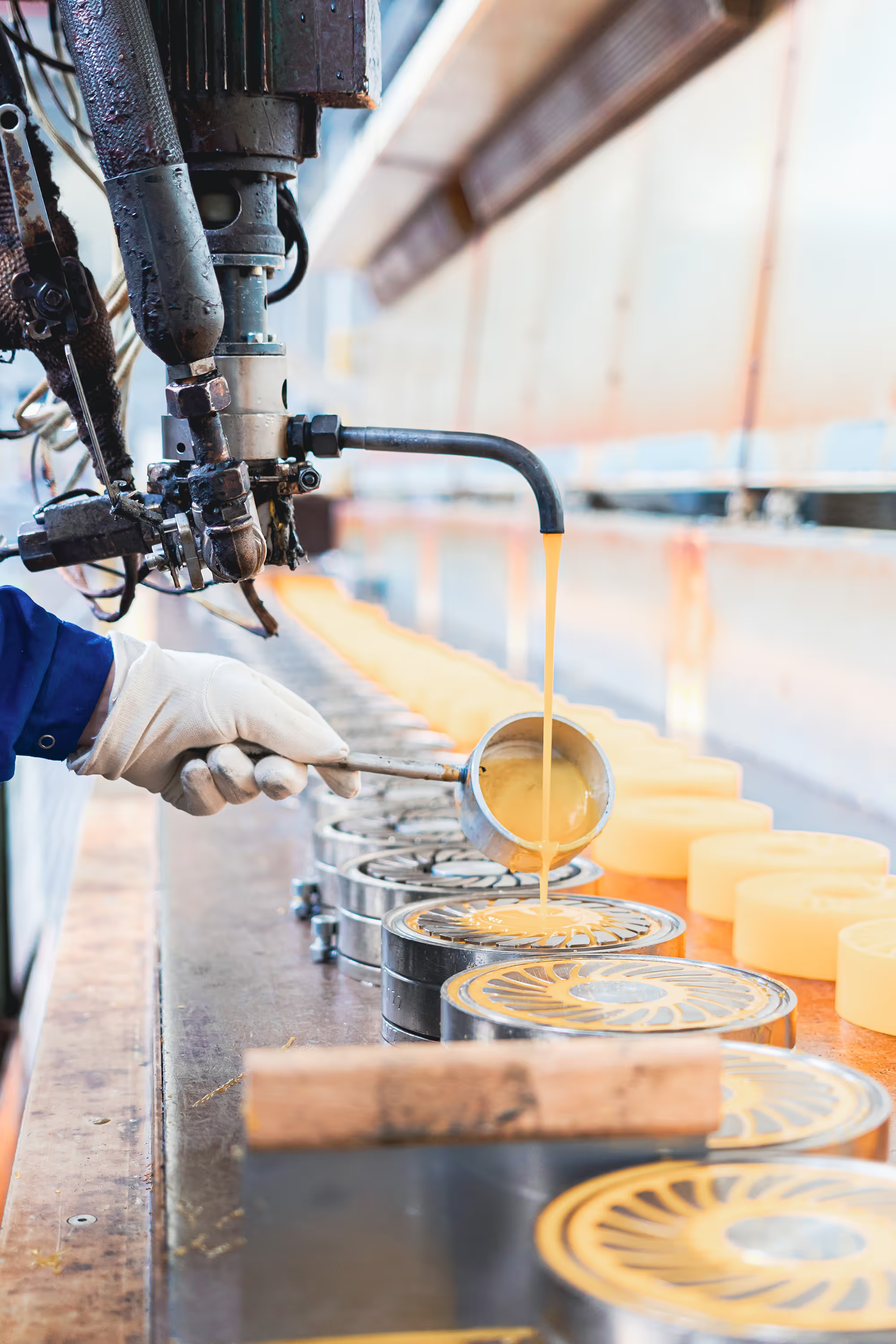
et nécessite une expertise technique. Chez P+S, nous nous appuyons sur systèmes flexibles de moulage à basse pression Et en ce qui concerne les produits qui ont fait leurs preuves
Procédé de coulée à chaud pour la production d'élastomères de polyuréthane microcellulaires et compacts.
Contrairement aux procédés classiques de moulage par injection, utilisés pour les polymères thermoplastiques, notre
Procès-verbaux relatifs à Réaction des composants des matières premières liquidesqui réagissent dans des conditions contrôlées. Grâce à l'exacte
En contrôlant la température, le rapport de mélange et le temps de démoulage, nous obtenons des pièces moulées de haute qualité à réaction homogène avec
qualité reproductible.
Matières premières et composants
La sélection des matières premières joue un rôle central dans la performance du composant suivant. Pour la production de nos
Nous travaillons avec des élastomères de polyuréthane avec une variété de composants de haute qualité qui permettent un ajustement ciblé de
Les propriétés du matériau permettent de :
- Isocyanates Comment former du NDI (1,5-diisocyanate de naphtalène), du TDI (diisocyanate de toluène) et du MDI (diisocyanate de diphénylméthane)
avec les polyols, le squelette des polyuréthanes. Ces substances réagissent avec les polyols pour former une élasticité durable
structures. - polyols: Selon le domaine d'application, nous utilisons des polyols de polyester, de polyéther ou de polycarbonate. Ces influences
Propriétés telles que la résistance à l'hydrolyse, le comportement de récupération et la résistance aux milieux. Au sein de ces groupes se trouvent
de nombreux types de polyols avec différentes longueurs de chaîne et fonctionnalités sont disponibles. - Networker: Différents agents de réticulation chimiques sont utilisés pour contrôler spécifiquement la densité de réticulation —
soit sur une base pétrochimique, soit sur une base biosourcée. - additifs: En ajoutant des additifs spécifiques, les élastomères de polyuréthane peuvent être davantage personnalisés :
- coloris
- agents antistatiques
- anti-microbiotiques
- Protection contre l'hydrolyse
- Améliorateur de glisse
Cette sélection modulaire de matières premières permet de créer un profil de propriété sur mesure pour chaque application, de manière économique et durable à la fois.
Procédés de polymérisation
Au cœur de la production de matériaux se trouve polyaddition: Réaction chimique au cours de laquelle les isocyanates et les polyols sont ajoutés
à partir des agents de réticulation, des additifs et, le cas échéant, des agents propulseurs réagissent pour former un plastique solide et élastique. Le contrôle exact de cela
La réaction est essentielle à la reproductibilité des propriétés du produit.
Techniques de moulage par injection d'élastomère de polyuréthane
P+S ne traite pas les élastomères de polyuréthane par moulage par injection. Nous nous concentrons sur les procédés de moulage à basse pression et de moulage à chaud, qui peuvent être utilisés pour produire beaucoup plus de pièces moulées individuelles et des propriétés de matériau supérieures, même en petites séries et en formats spéciaux.
Les élastomères polyuréthanes dans l'industrie des transports
Les élastomères de polyuréthane répondent aux exigences élevées de capacité de charge et de durabilité de l'industrie des transports. Les matériaux P+S offrent des solutions sur mesure pour les applications de transport qui permettent une transmission de puissance et un amortissement des vibrations efficaces.
Transportez les foules et
déplacer
Le Vulkollan® et le Diepothan® sont idéaux pour le transport des rouleaux et des composants d'entraînement. Ils offrent une protection élevée contre l'abrasion et une excellente adhérence, ce qui les rend parfaits pour le travail en équipes continues. Leur élasticité et leur dureté garantissent une résistance stable dans des conditions changeantes.
Isolez et découplez les vibrations
Le Vulkocell® et le Diepolast® sont idéaux pour l'isolation contre les vibrations et les bruits corporels. Ils offrent des caractéristiques d'amortissement précises et sont compressibles, idéaux pour les structures compactes et les appareils mobiles, adaptés pour une efficacité maximale dans l'espace d'installation.
Amortissez les masses et absorbez l'énergie
Diepocell® est le bon choix pour les applications qui ont besoin d'absorber de l'énergie. Il offre des éléments tampons robustes et est compressible en fonction du volume pour s'adapter à l'espace d'installation et au profil de charge, et convient également aux conditions de fonctionnement globales.
Les élastomères de polyuréthane dans l'industrie mécanique
Les élastomères de polyuréthane sont très demandés en génie mécanique en raison de leur adaptabilité et de leur robustesse. Ils résistent à des températures élevées et à des influences environnementales agressives. Ils conviennent à un large éventail d'applications, des joints aux amortisseurs à volume élevé.
Scellez les zones sensibles
Vulkollan® et Vulkocell® fournissent des solutions d'étanchéité durables pour les applications dynamiques. Leur capacité autolubrifiante et leur capacité de charge les rendent idéales pour les conditions de pression changeantes et les conceptions compactes.
Nettoyez les matériaux et les supports
Le Vulkollan® et le Diepothan® sont parfaits pour les grattoirs et les racleurs. Leur élasticité et leur résistance à l'usure garantissent des processus propres dans les environnements industriels, de la transformation des aliments à la transformation des métaux.
Masses du ressort et emmagasine de l'énergie
Vulkocell® et Diepothan® proposent des éléments de ressort personnalisables pour les systèmes mécaniques qui réduisent les vibrations et stockent l'énergie. Ils permettent d'économiser de l'espace et sont adaptables individuellement, ce qui est idéal pour les conceptions complexes.
Élastomères polyuréthanes dans l'industrie agricole
Les composants techniques en élastomères de polyuréthane sont particulièrement appréciés dans la fabrication de véhicules et de machines agricoles, car ils sont extrêmement robustes et résistants aux produits chimiques. Ils résistent à l'humidité et aux microbes et peuvent résister aux conditions les plus difficiles.
Amortissez les masses et absorbez l'énergie
Le Diepocell® est idéal pour amortir de grandes masses. Il peut être utilisé de manière très rentable, en particulier dans la fabrication de machines et d'équipements agricoles. Il fournit des éléments absorbant l'énergie qui fonctionnent de manière fiable même dans des conditions difficiles et prolongent la durée de vie de l'équipement.
Masses du ressort et emmagasine de l'énergie
Vulkocell® et Diepothan® proposent des éléments de ressort durables pour la technologie agricole. Ils sont adaptables en termes de dureté et de géométrie, idéaux pour les conditions environnementales changeantes et les conceptions compactes.
Durabilité et aspects environnementaux
La durabilité n'est pas une tendance, mais fait partie de notre responsabilité, même dans le cadre de la production de produits performants élastomères de polyuréthane. Nos solutions impressionnent non seulement par leurs performances techniques, mais également par leur approche de développement économe en ressources et tournée vers l'avenir. La grande robustesse et la longue durée de vie de nos élastomères de polyuréthane garantir une utilisation durable dans un large éventail d'applications. Dans la mesure du possible, nous utilisons des matières premières biosourcées et n'utilisons que des composants et des revêtements conformes aux normes REACH et RoHS. En outre, une grande partie de l'énergie utilisée pour la production provient de sources alternatives. Les nôtres Certification EcoVadis confirme notre engagement en faveur de la transparence, de la responsabilité et de la durabilité tout au long de la chaîne de valeur.
options de recyclage
Le recyclage des élastomères de polyuréthane n'est techniquement possible que dans une mesure limitée. Néanmoins, nous travaillons constamment sur des solutions innovantes pour prolonger le cycle de vie de nos matériaux. Un exemple de ceci est Recyclage des déchets de mousse, qui sont réutilisés dans d'autres systèmes industriels. La grande majorité des élastomères retirés du marché sont actuellement utilisés comme récupération d'énergie fourni : procédé par lequel l'énergie thermique peut être récupérée et utilisée efficacement.
L'efficacité énergétique dans la production
La production de élastomères de polyuréthane est associée à un besoin énergétique élevé, car des températures élevées sont requises pendant le traitement. Néanmoins, nous sommes en mesure de rendre notre utilisation de l'énergie de plus en plus efficace. Avec échangeurs de chaleur tout au long du processus de production la chaleur de procédé précieuse est récupérée. Dans le même temps, nous couvrons une grande partie de notre consommation d'électricité énergie produite de manière alternative. Même la conversion complète en Technologie LED L'éclairage de nos installations de production contribue à améliorer l'efficacité énergétique.
conclusion
élastomères de polyuréthane offrent une combinaison exceptionnelle de résilience, de polyvalence et d'efficacité, issues de nombreuses années d'expérience dans le secteur des transports, de la construction mécanique et de la technologie agricole. Leur haute résistance à l'abrasion, leur résistance chimique et leur stabilité dimensionnelle en font la solution idéale pour de nombreuses applications industrielles. Dans le même temps, nous accordons une grande importance aux matières premières durables, aux processus économes en énergie et aux approches de recyclage innovantes, le tout dans le cadre d'une conception future responsable.
Vous recherchez un matériau durable, adaptable et durable pour votre application ? Alors, faites confiance à notre expertise en matière d'élastomères de polyuréthane P+S.
Contactez-nous — nous serons heureux de vous fournir des conseils personnalisés et orientés vers des solutions.